Boat excursions in Villasimius: prices and AMP 2026
Boat excursions in Villasimius 2026: from €35-55 per person, Isola dei Cavoli, Capo Carbonara, AMP, departures from the port and 0% commissions.
In questo articolo
Villasimius reveals itself only from the sea
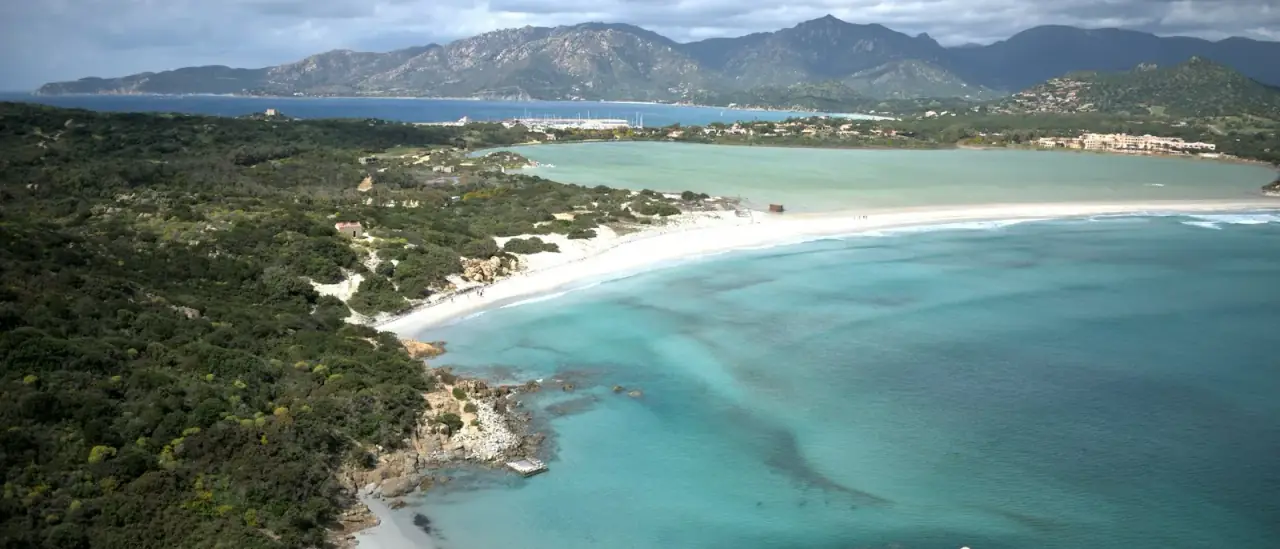
The granite promontory of Capo Carbonara, the waters that shift from azure to emerald green, the Isola dei Cavoli with its white lighthouse, and in the background the profile of the Isola di Serpentara form one of the most extraordinary landscapes in the southern Mediterranean.
A boat trip in Villasimius in 2026 departs from the Marina di Villasimius and costs approximately €35-55 per person for the half-day and €60-80 per person for the full-day shared tour, with swimming stops near the islands and in the coves of Capo Carbonara. This guide covers what you’ll see, how much it costs, where you depart from, and the rules of the protected marine area.
Choose your scenario
Before booking, identify the situation that best matches yours:
- You want to relax without driving: the shared tour with a skipper is the simplest and most economical option, with a guided itinerary and stops in the coves and near the islands.
- You’re with family or a group: consider a private boat with a skipper, splitting the cost per person among the group.
- You want total autonomy: renting a RIB without a boating licence lets you choose your stops and schedule, within 6 nautical miles of the coast and in compliance with the AMP zones.
- You want to know what to see: go to the section on sea destinations, including Isola dei Cavoli, Punta Molentis, and the coves of Capo Carbonara.
What you’ll see from the sea around Villasimius
The coast of Villasimius, on the south-eastern side of Sardinia, is a sequence of views that remain almost inaccessible from land. From the sea, the coast opens up to coves, islands, and granite promontories, with white-sand seabeds visible through some of the clearest waters in Italy.
- Punta Molentis: a narrow strip of white sand between two arms of the sea, with Caribbean-coloured waters on either side. It’s one of the most photographed spots in southern Sardinia, easily reachable by boat from the Marina di Villasimius in just a few minutes. The view from the sea is different from land: you can see the entire little peninsula with coves on either side and shallow seabeds that change colour depending on the depth.
- Cala Caterina: a secluded, sheltered cove nestled among granite rocks, a short distance from Punta Molentis. It’s a tranquil spot, ideal for a swimming stop in calm waters, with gently sloping seabeds of light sand.
- Porto Giunco: the iconic beach of Villasimius, with its expanse of white sand, the Notteri lagoon behind it, and the lighthouse of Capo Carbonara closing the promontory on the eastern side. From the sea, you can take in its beauty all at once: the beach, the turquoise waters, the lagoon, and the white lighthouse on the promontory. It’s one of the most recognisable images of southern Sardinia.
- Isola dei Cavoli: the heart of the excursion. A small granite island of about 42.6 hectares, located about 700 metres south of the Capo Carbonara promontory, with a historic lighthouse at its summit. From the sea, you can see the island’s profile with its Mediterranean scrub and white lighthouse, surrounded by waters that shift from emerald green to deep blue. The seabeds around the island are home to seagrass meadows, dolphins, and sea turtles. The island falls within the Capo Carbonara marine protected area, with navigation and anchoring rules to be respected.
- Isola di Serpentara: larger than Isola dei Cavoli and further east, off the northern edge of the protected marine area. Serpentara is one of the wilder, less-visited islands in south-eastern Sardinia, with an elongated shape reminiscent of a snake lying on the water. It’s reachable in calm seas, sailing east from the Capo Carbonara area.
- Capo Carbonara and the Variglioni: the promontory that marks the eastern edge of Villasimius’ coast, with granite cliffs plunging into the sea. Around the promontory emerge the Variglioni, rocks of great natural value that partly fall within Zone A of the AMP’s integral reserve.
The light in Villasimius has a special quality: in the early morning, the waters near Capo Carbonara take on an almost metallic luminosity, with reflections that shift from green to turquoise to cobalt depending on the angle and depth. It’s the light that makes you understand why this stretch of coast is considered among the most beautiful in the Mediterranean.
How much does a boat trip in Villasimius cost?
The cost depends on the chosen formula, duration, and season. The shared group tour is the most economical solution; the private boat with a skipper offers freedom of schedule and stops; renting a RIB is the option for those who want full autonomy. Here are the indicative price ranges for 2026.
| Formula | Duration | Indicative price |
|---|---|---|
| Shared group tour, half-day | 3-4 hours | €35-55 per person |
| Shared group tour, full-day | 6-8 hours | €60-80 per person |
| 40 HP RIB without licence | Full-day | €250-400 (low season) - €450-650 (high season) |
| 40 HP RIB without licence, half-day | 3-4 hours | €140-270 |
| Private boat with skipper | Full-day | From €350-500 per boat |
Indicative local rates for 2026, to be confirmed with the operator. Low season: May, June, September. High season: July, August. Fuel is normally not included in self-hire rentals.
What affects the price
- Formula: the shared tour costs a fraction of a private boat, with fixed schedules and itineraries.
- Season: August is the peak, while June and September are significantly cheaper for the same formula.
- Duration: the full-day tour, with more stops and the possibility of reaching Serpentara, costs more than the half-day.
- Inclusions: lunch on board, drinks, snorkelling equipment, and a typical aperitivo may or may not be included. Check before booking.
0% zero commissions
On The Boat Platform, compare excursions and boats with zero commissions: contact the boat owner directly, without the 18-26% surcharge applied by major international marketplaces. → Explore boat experiences in Villasimius
The Capo Carbonara AMP from the sea: coves, islands, and seabeds
Sailing in the Capo Carbonara marine protected area is a unique experience. The AMP covers about 14,360 hectares of sea between the Capo Carbonara promontory, Isola dei Cavoli, and Isola di Serpentara, with seabeds that host some of the most extensive seagrass meadows in the Mediterranean, as well as dolphins and sea turtles.
From a sailor’s perspective, the area is best understood in terms of wind. The coast of Capo Carbonara is exposed to both the mistral (north-westerly) and scirocco (south-easterly) winds.
With the mistral from the north-west, the western side quickly becomes choppy, while the eastern side towards the islands remains calm and sheltered. With the scirocco from the south-east, the side towards Porto Giunco suffers. Choosing the right time—usually early in the morning—and the side sheltered from the day’s wind makes the difference between a comfortable day and an exhausting one.
The best swimming stops are in the sheltered coves between the coast and Isola dei Cavoli, where the water is calm and the white-sand seabeds slope gently.
Seagrass meadows must always be protected: to stop, use the mooring buoys where available, with AMP authorisation; anchoring is only permitted on sandy, inert seabeds in designated areas like Campulongu and Porto Giunco, never on seagrass. It’s this ecosystem that makes Villasimius’ waters so transparent.
Explore boat experiences in Villasimius
The Capo Carbonara Marine Protected Area: boat rules
The Capo Carbonara AMP is managed by the Municipality of Villasimius and is divided into four zones with increasing levels of protection. Knowing them before setting off isn’t optional: penalties for violating the protected area’s rules can be severe.
- Zone A, integral reserve: navigation, fishing, and bathing are prohibited. It includes certain rocks and limited areas around the islands, such as the Variglioni of Isola dei Cavoli (north-east and south-east) and the north-western coast of Serpentara, as well as the Piscadeddus shoal and Santa Caterina shoal. Approaching is not permitted. Other stretches of sea around the same islands fall instead into Zones B or C: to know exactly where the boundary lies, consult the updated AMP regulations’ cartography.
- Zone B, general reserve: navigation is permitted in displacement mode, at speeds not exceeding 5 knots within 300 metres of the coast and 10 knots in the 300-600 metre band; recreational vessels are not allowed. Mooring is done at the AMP’s buoys, with authorisation from the managing authority.
- Zone C, partial reserve: same speed and displacement mode rules as Zone B. Mooring is at the AMP’s buoys, while anchoring is only permitted on sandy, inert seabeds in designated areas like Campulongu and Porto Giunco, and never on seagrass.
- Zone D, experimental reserve: a two-mile buffer zone with its own rules. Authorisation rules and areas set out in the Implementing Regulation (REO) and current regulations apply, with less restrictive limits than Zones B and C; buoys remain an authorised mooring, and anchoring on seagrass is always prohibited.
AMP Capo Carbonara: check the zones before setting off
The Capo Carbonara marine protected area is divided into four zones (A, B, C, D). In Zone A, navigation is prohibited: it includes certain rocks around the islands, such as the Variglioni of Isola dei Cavoli and the north-western coast of Serpentara, while other nearby points are in Zones B or C. In Zones B and C, navigation must be in displacement mode with speed limits (5 knots within 300 m of the coast). In Zone D, less restrictive limits apply. The AMP’s buoys are moorings by authorisation; anchoring is only permitted on sandy, inert seabeds in designated areas, never on seagrass. Check the updated cartography and regulations on ampcapocarbonara.it before setting off: ordinances can change every season.
Those who choose an organised tour rely on operators who know the AMP zones’ boundaries and updated rules, reducing the risk of unintentional errors. For those renting independently, researching in advance and verifying the ordinances of the competent Port Authority (Capitaneria di Porto) is the most responsible choice.
Do you need a boating licence to sail in Villasimius?
For the long coastal route between the Marina di Villasimius, Punta Molentis, and the coves of Capo Carbonara, staying within 6 nautical miles of the coast, a vessel with an engine no larger than 40.8 HP (30 kW) can be operated without a licence, within the limits set by Article 39 of Legislative Decree 171/2005 (Italian Boating Code). This rule applies along all Italian coasts.
According to the Boating Code (Legislative Decree 171/2005, Art. 39), a vessel with an engine up to 40.8 HP (30 kW) can be operated without a licence within 6 nautical miles of the coast. Beyond that limit, or with more powerful engines, a boating licence is mandatory.
In practice, the Marina di Villasimius, Punta Molentis, Cala Caterina, Porto Giunco, and Isola dei Cavoli are all within 6 nautical miles and can be reached with a 40 HP RIB without a licence. Isola di Serpentara is about 1.7 nautical miles from the coast and also falls within the limit, but navigation in that area must be verified against the AMP zones. Operators typically require the renter to be at least 18 years old.
Those without a licence or who prefer not to drive always have the alternative of a shared tour, where you sail as a passenger, or a private boat with a skipper on board.
No licence?
To understand what’s permitted and where, read the guide to renting a boat without a licence in Italy. Along the coast of Villasimius, the route between the Marina, Punta Molentis, and Isola dei Cavoli stays within 6 nautical miles. A 40 HP RIB can be operated without a licence only if all legal requirements and local rules are met (within 6 nautical miles of the coast, minimum age verified by the rental company, safety equipment on board, suitable weather, AMP regulations and ordinances). Alternatively, shared tours and boats with a skipper remain options.
Where to depart from
The main departure point is the Marina di Villasimius (Porto di Villasimius), the largest marina in south-eastern Sardinia, located at the base of the granite promontory of Capo Carbonara, within the marine protected area.
With 840 berths, 17 piers, and a maximum depth of 6.5 metres, the Marina is also the exclusive departure point for excursions to Isola dei Cavoli, Serpentara, and Cala Pira. Most rental and excursion operators are based here, with boats ready for boarding from early morning.
Boarding only takes place from authorised points: it’s important to know this because the 2026 AMP regulations designate an area off Spiaggia del Riso, on the western coast of the town, as off-limits, with prohibitions on anchoring, mooring, transit, and fishing. Spiaggia del Riso remains a beautiful beach to reach by land, but it’s not a generic departure point: to set off, you must use operators based at the Marina or other permitted docks.
The Marina di Villasimius is about 50 km from Cagliari along the SS125, the scenic Sarrabus road. The road has two lanes with narrow stretches and curves: allow at least 55-65 minutes from Cagliari-Elmas Airport.
Half-day or full-day?
The choice of duration changes the experience. A half-day, 3-4 hours, is enough for the Punta Molentis route, a stop at Cala Caterina, and approaching Isola dei Cavoli, making it the right choice with small children or slightly rough seas. Early morning is the best time: the wind is still calm, the light is exceptional, and the coves are almost deserted.
A full-day, 6-8 hours, allows you to also reach Isola di Serpentara further east, explore more coves, have more swimming and snorkelling stops, and enjoy lunch on board or in a sheltered cove. It’s the right choice for those who want to see the full tour of the protected marine area.
For those with little time, a half-day in the morning is always better than a full day in the afternoon: the sea is calmer, the coves less crowded, and the light is better for photos.
What to bring on board
For an excursion in the Capo Carbonara area, it’s worth preparing:
- Documents and the card for any deposit in self-hire rentals
- High-factor sun protection, a wide-brimmed hat, sunglasses, and a light shirt for the wind on the way back
- Enough water, at least 2 litres per person, and a snack or lunch if not included in the tour
- Mask and fins for snorkelling in the transparent waters around Isola dei Cavoli
- Reef shoes for stops on the rocky seabeds of the coves
- A dry bag for your phone and documents during swims
What to know before booking
To avoid surprises, clarify these points with the operator before confirming:
- Actual itinerary: does the tour really reach Isola dei Cavoli and Serpentara, or does it stop at the nearest coves? With rough seas, the itinerary may be shortened.
- AMP zones included: is the tour authorised by the AMP and does it respect the zones? Ask for confirmation.
- What’s included: snorkelling, beverages, lunch on board, or just time in the water. Verify this.
- Number of passengers: a crowded boat reduces comfort during stops.
- Weather policy: with strong mistral or scirocco winds, the itinerary may change or be postponed. Ask how changes and refunds work.
When not to go on a boat trip
The coast of Capo Carbonara is exposed to both the mistral and scirocco winds. With strong winds, waves form quickly, the areas around the islands become choppy, and swimming stops lose quality. On those days, it’s better to postpone, accept a reduced itinerary on the more sheltered side, or choose a half-day trip in the early morning when the wind is still calm.
The same applies to those prone to seasickness: a calm half-day is better than four hours on a choppy sea. On Ferragosto (15 August), the coves around Capo Carbonara and the AMP’s mooring buoys are packed, with peak prices and few last-minute options. If possible, prefer June or September, when the sea is warm, prices are more affordable, and the coast is less crowded.
How to book on The Boat Platform
The process is straightforward and commission-free:
- Search for experiences and boats in the Villasimius area
- Compare duration, itinerary, formula, and price per person
- Read the description and photos of each offer
- Contact the operator or owner directly
- Agree on inclusions, time, and departure point
- Book, usually with a deposit and final payment before departure
On The Boat Platform, you don’t pay any platform commission. On other marketplaces, the commission charged to the booker is typically between 18% and 23%, added to the agreed price.
In summary
A boat trip in Villasimius opens up one of the most beautiful seas in the Mediterranean, between the granite coves of Capo Carbonara, Isola dei Cavoli with its lighthouse, Isola di Serpentara, and the Caribbean-like waters of Punta Molentis. The shared group tour departs from about €35 per person for the half-day and about €60 for the full day.
Those who want autonomy can rent a RIB without a licence, staying within 6 nautical miles, according to Art. 39 of Legislative Decree 171/2005. Two precautions always apply: set off in the morning, when the wind is still calm, and respect the zones of the Capo Carbonara AMP, checking the updated ordinances on ampcapocarbonara.it before every trip.
For renting RIBs in Villasimius, read the full guide to renting RIBs in Villasimius. For boat rentals across Sardinia, see the complete guide to renting boats in Sardinia. Use The Boat Platform to book directly with the boat owner, at 0% commission.
Come fare, passo passo
- 1
Choose the formula and departure point
Boat excursions in Villasimius depart from the Marina of Villasimius, the largest marina in south-eastern Sardinia. The shared group tour is the most economical option, at about €35-55 per person for the half-day. A private boat with skipper is convenient for families or groups sharing the cost. Those with experience can rent a 40 HP RIB without a licence within 6 nautical miles. Choose based on your budget and desire for independence.
- 2
Check the weather and departure time
The coast of Capo Carbonara is exposed to both the mistral and sirocco winds, and the sea forms quickly. It is best to depart early in the morning, when the wind is still calm, and check the Coast Guard bulletin. With strong winds, approaching the islands is not recommended and the itinerary is reduced to the most sheltered coves. The final decision always rests with the boat skipper.
- 3
Sail towards Isola dei Cavoli and the coves of Capo Carbonara
The typical route hugs Punta Molentis, Cala Caterina and Porto Giunco, then reaches the Capo Carbonara promontory and Isola dei Cavoli. The island is surrounded by the protected marine area: navigation complies with the AMP zones, avoiding the rocks (the Variglioni) that fall within Zone A of full reserve and using the AMP’s authorized mooring buoys where available. In calm seas you can also reach Serpentara, further east. Always check the updated AMP regulations map.
- 4
Take swimming stops in the reserve waters
Swimming stops take place in the transparent waters near Isola dei Cavoli, in the coves around Capo Carbonara and Punta Molentis, avoiding the full reserve zones. Mooring is at the AMP’s buoys and field buoys, which require authorization from the managing authority. Anchoring in Zone C is permitted only on inert sandy seabeds in designated areas, such as Campulongu and Porto Giunco, never on posidonia. The water colour, ranging from emerald green to deep blue, is among the most beautiful in the Mediterranean.
- 5
Respect the AMP rules and return to port
At the end of the trip, return to the Marina of Villasimius while respecting the speed limits of the protected area. Take all waste produced on board with you. Before booking, check the updated ordinances on the official AMP website (ampcapocarbonara.it): zones and rules can change from season to season.
Pubblica la tua barca, 0% commissioni per sempre
Frequently asked questions
How much does a boat excursion in Villasimius cost?+
The shared group tour costs approximately €35-55 per person for the half-day and €60-80 for the full day, depending on the operator and inclusions. A private boat with skipper starts from about €350-500 per boat per day, ideal for families or groups sharing the cost. Renting a 40 HP RIB without a licence starts from about €140-270 for the half-day and from about €250-400 per day in low season, up to €450-650 in high season, depending on size and operator. Indicative rates from local 2026 price lists, to be confirmed with the operator.
What can you see on a boat excursion from Villasimius?+
From the sea you can see Punta Molentis with its sandspit between two arms of water, Cala Caterina, Porto Giunco with the lighthouse of Capo Carbonara in the background and the Notteri lagoon, Isola dei Cavoli with its historic lighthouse, and Isola di Serpentara. The waters range from emerald green to deep blue over white-sand seabeds. The coast is a sequence of granite coves that are almost always inaccessible from the mainland.
What is the Capo Carbonara AMP and what are the boat rules?+
The Capo Carbonara Marine Protected Area is divided into four zones with different levels of protection. In Zone A, the full reserve, navigation is prohibited (it includes some rocks around the islands, such as the Variglioni). In Zones B and C, boats must travel at displacement speed, with speed limits of up to 5 knots within 300 metres of the coast and 10 knots between 300 and 600 metres; in Zone B, pleasure craft are not admitted. In Zone D, the experimental reserve, less restrictive limits apply. Mooring is only allowed at the AMP’s buoys, with authorization from the managing authority; anchoring is permitted only on inert sandy seabeds in designated areas, never on posidonia. Always check the updated regulations on ampcapocarbonara.it.
Do you need a licence to sail in Villasimius?+
No, if you take part in an organized tour: there is a licensed skipper on board. A licence is only required if you rent a boat independently that exceeds the limits set out in article 39 of the Nautical Code. According to Legislative Decree 171/2005 art. 39, a vessel with an engine not exceeding 40.8 HP (30 kW) can be operated without a licence within 6 nautical miles of the coast. The stretch of coast between the Marina of Villasimius, Punta Molentis and the coves of Capo Carbonara can comfortably be covered within this limit.
Where do boat excursions in Villasimius depart from?+
The main departure point is the Marina of Villasimius (Port of Villasimius), the largest marina in south-eastern Sardinia, located at the base of the Capo Carbonara promontory. With 840 berths and full services, it is the exclusive base for excursions in the protected marine area towards Isola dei Cavoli, Serpentara and Cala Pira. Boarding only takes place from authorized points: the 2026 AMP regulations prohibit anchoring, mooring, transit and fishing in the area in front of Spiaggia del Riso, so it is not a generic boarding point.
What is the best time for boat excursions in Villasimius?+
The season runs from May to September. June and September offer warm seas, lower prices and less crowds compared to July and August, which are the peak. Each month it is best to depart in the morning, before the breeze has strengthened. The coast of Capo Carbonara is exposed to both the mistral and sirocco winds: with strong winds the sea becomes choppy quickly and approaching the islands is not recommended.
Is the boat excursion suitable for families with children?+
Yes, by choosing calm-sea days and an operator with a spacious boat. The coves around Capo Carbonara and the waters near Punta Molentis have shallow, transparent seabeds, ideal for swimming even for the youngest. Children’s life jackets are legally mandatory: check that the operator provides them. For families, the half-day morning trip is often the most convenient option.
How do you book on The Boat Platform?+
On The Boat Platform you will find the experiences and boats available in the Villasimius area, read descriptions and photos and contact the operator directly, with no platform commissions. On other marketplaces, the commission charged to the booker is usually between 18 and 23 percent and is added to the price. You agree on price, itinerary, inclusions and departure time; booking is normally made with a deposit and final payment before departure.
Fonti
Come abbiamo prodotto questo articolo
- Fonti consultate: 3 fonti istituzionali e di settore (vedi sezione Fonti sopra)
Per il processo di fact-check, le fonti accettate e la procedura di rettifica, consulta la nostra Editorial Policy.
Cosa vuoi fare su The Boat Platform?
Related articles
Noleggio gommoni Villasimius: prezzi e AMP 2026
Noleggio gommoni Villasimius 2026: da 130€ al giorno, 40 CV senza patente, Porto Giunco, Punta Molentis e 0% commissioni.
Noleggio barche in Sardegna: guida completa 2026
Noleggio barche in Sardegna senza commissioni: prezzi 2026, gommoni, vela, skipper, patente e zone da Gallura a Villasimius.
Escursione in barca a Baia delle Zagare: prezzi 2026
Escursione in barca da Mattinata nel 2026 senza commissioni: Baia delle Zagare, faraglioni e grotte del Gargano, durata e prezzi.